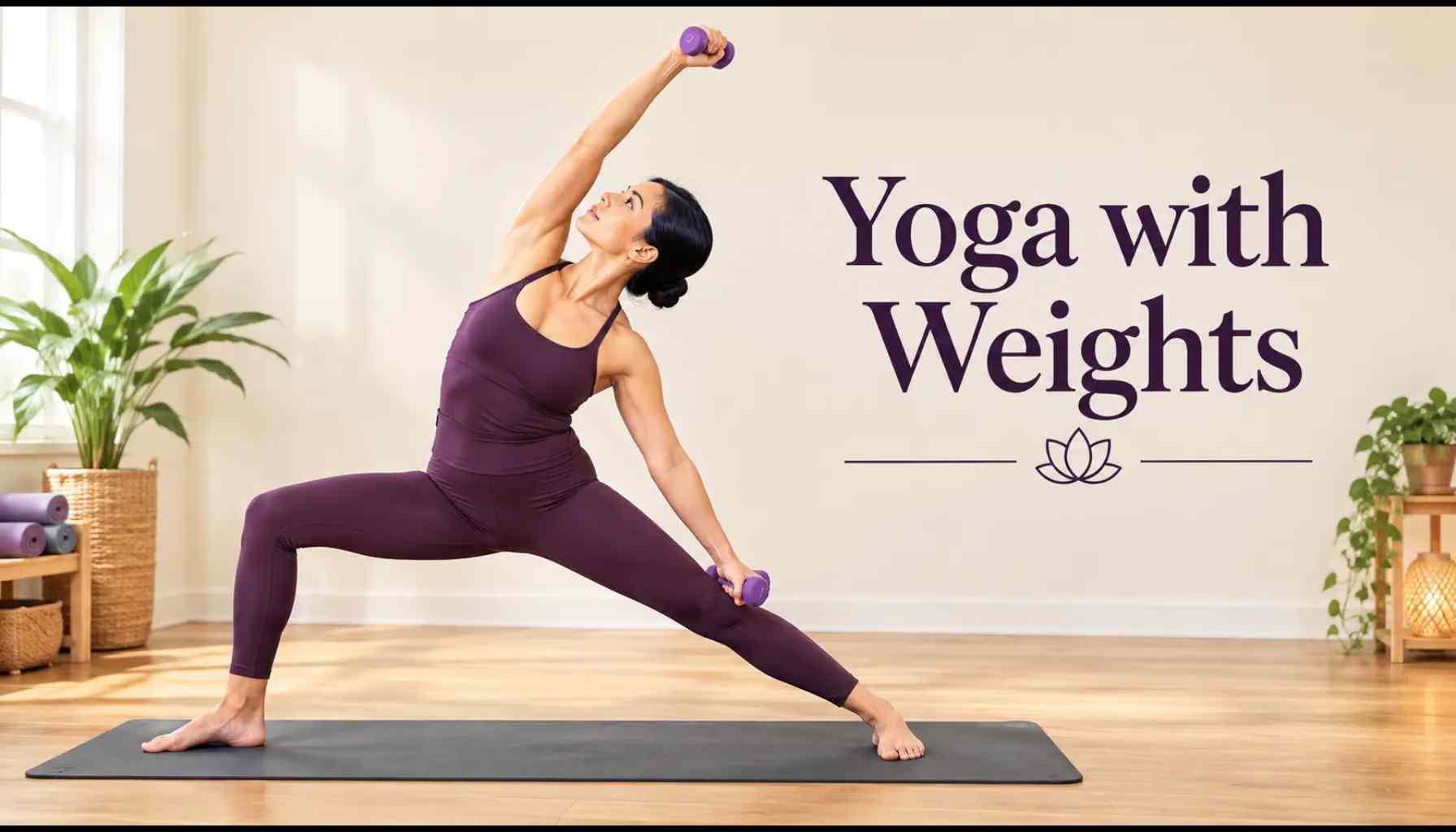
Yoga with Weights: Building Strength
Yoga with weights blends the mindful flow of a traditional practice with the muscle-building power of light resistance. If bodyweight poses have started to feel easy, or you want strength training without leaving your mat, this hybrid style offers a fresh challenge. Here is how it works, why it helps, and six poses to try today.
Key Takeaways
- Yoga with weights adds resistance to familiar poses, building strength and focus together.
- It is advisable to begin with one to three pounds and concentrate on positioning first.
- Perform the workouts two to three times per week.
What Is Yoga with Weights?
Yoga with weights means holding light dumbbells, and sometimes wearing ankle weights, while moving through familiar postures. You don't learn a new routine. You add resistance to shapes you already know.
The extra load makes muscles work harder, while slow movement and steady breathing keep your attention on alignment. Studios often label these sessions yoga sculpt, yoga conditioning, or power flow.
Key Benefits of Yoga With Weights
1. Strength in muscles and bones. When exercising with resistance and doing weight bearing exercises, the muscle is challenged and the bone is stimulated to maintain its density, especially with age.
2. Balance and joint stability. With stronger muscles around the hips, knees, and ankles, you will have better balance and movement.
3. Metabolic rate boost. Muscles consume more energy than fat, and because of the continuous flow of exercises, you will gain strength and cardiovascular fitness from it.
4. Focus. It takes concentration to hold a weight.
How Heavy Should Your Weights Be?
Start lighter than you think. One to three pounds suits most beginners, and five pounds is plenty for experienced practitioners. Long holds and repeated reps tire muscles quickly, and tired muscles let alignment slip.
If you're unsure, make a fist and rehearse the movement first. Add a pound only when your form stays smooth for a whole session. Save heavier lifting for separate strength workouts.
6 Yoga Poses with Weights
Aim for 8 to 10 repetitions per move, or hold for five slow breaths where noted.
1. Utkatasana (Chair Pose) with Bicep Curls
- Feet should be together; bend the knees, and sit back with hips.
- Take a dumbbell in each hand, palms facing forward, elbows close to your rib cage.
- Bring the dumbbells up towards the shoulders, slowly lowering them, keeping the chest up.
2. Virabhadrasana II (Warrior II) with Lateral Raises
- Step wide, turn your front foot out, and bend that knee over your ankle.
- Hold weights low in front of your thighs, shoulders relaxed, torso upright.
- Raise both arms to shoulder height, pause briefly, then lower with control.
3. Virabhadrasana III (Warrior III) with Weights at Chest
- From a lunge position, move into a front-foot stance with both weights on your chest.
- Lean forward and elevate the rear foot such that your body makes a straight and stable T.
- Maintain an even hip position, inhale five times, and return to your previous stance, repeating on the opposite side.
4. Vasisthasana (Side Plank) with Top-Arm Reach
- From plank, roll onto one hand, stack or stagger your feet, and lift your hips.
- Hold a light weight in your top hand and reach it toward the ceiling.
- Keep your body in one straight line, or lower the bottom knee to modify.
5. Naukasana (Boat Pose) with Weighted Hold
- Take a seat with legs bent at the knee joints and lower back reclined.
- With both hands grip a single dumbbell while your spine is straight.
- Project the dumbbell in front of you, hold for some breaths, and lower down.
6. Setu Bandha Sarvangasana (Bridge Pose) with Chest Press
- Lay down on your back with the legs bent and feet shoulder-width apart from each other.
- Raise up the hips and support two weights above the chest with your hands.
- Push up the weights and bring them down slowly without lowering your hips.
Safety Tips Before You Begin
Perform a few rounds of Sun Salutations to warm up your joints before starting your exercises. Remember to keep some slight bend in your elbows and do not swing the weights. In case your balance exercises make you wobble, put the weights down and try doing the exercises without them. Always consult your physician if you suffer from injuries, osteoporosis, or hypertension.
Final Thoughts
Yoga with weights doesn't replace a classic practice. It complements one. Start light, move slowly, and let your breath guide each rep. Within a few weeks, you may find that holding poses feels steadier and your daily movements feel stronger.
Frequently Asked Questions
1. Is yoga with weights effective?
Yes. The added resistance requires more muscular effort in every position, and that could aid in developing strength and endurance that would not be possible otherwise, provided that your posture is flawless.
2. What weight is appropriate for yoga?
One to three pounds work for beginners. Select a weight that will allow you to maintain your posture and breathe properly. Increase the weight by only one pound when it becomes easy for you to do the exercises.
3. Is weight loss achievable through yoga with weights?
Yes, it is. Increased muscle mass elevates your basal metabolism, and dynamic practice increases your heart rate. Your diet, sleep patterns, and exercise routine will play a key role in this process as well.
4. How often should I practice yoga with weights?
Two to three sessions a week works well for most people, leaving rest days for recovery. That fits within the CDC's adult physical activity guidelines, which recommend muscle-strengthening activity at least two days a week.
Also Read: Face Yoga Exercises
By Umesh Kumar Khiri


Discussion (0)
No comments yet. Be the first to comment!
Leave a Comment
You need to login to post a comment.