

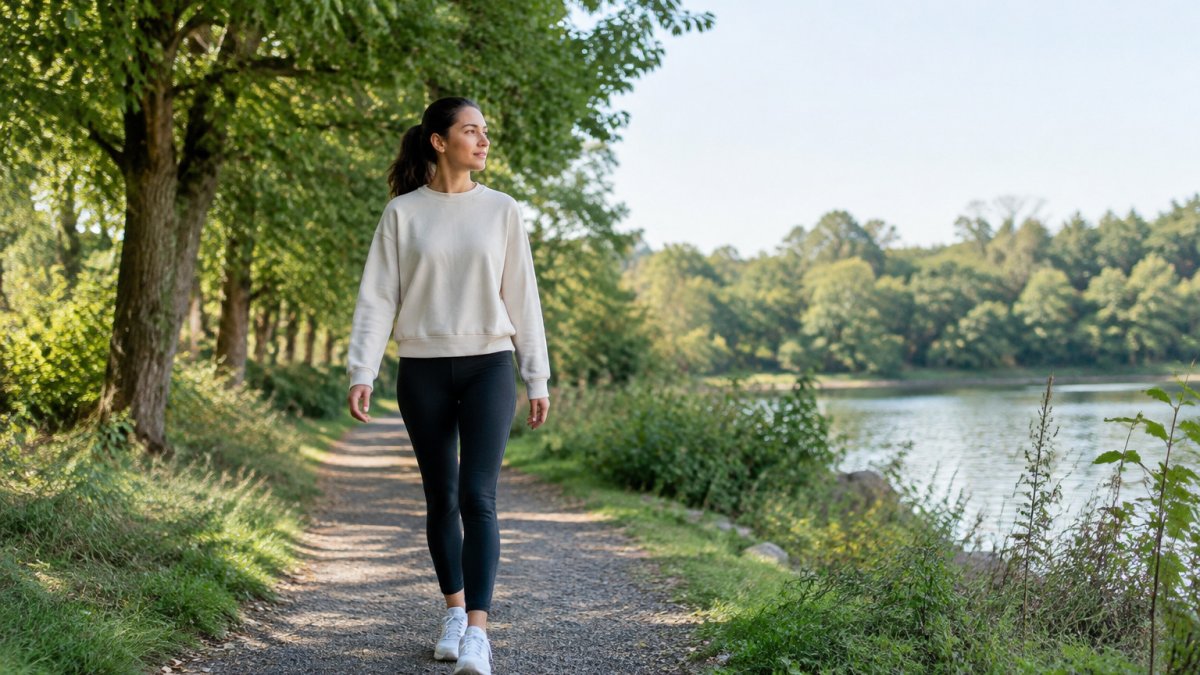
Last Updated: November 25, 2026
Quick Summary
Walking meditation is a mindfulness practice where you walk slowly and deliberately while paying close attention to the body, breath, and surroundings, rather than walking to reach a destination. For beginners, a first session should be short and simple: ten minutes on a flat path, noticing the lift, move, and place of each foot, and returning attention to the walk whenever the mind wanders.
- Walk at half your normal pace, taking roughly 10-20 steps from one end of your path to the other, then pause, turn, and walk back.
- Focus on the feet first, since physical sensation is easier to return to than a thought.
- A 10 minute walking meditation fits into a lunch break, a morning routine, or the gap between meetings.
- Keep your eyes open with a soft, lowered gaze outdoors, and never use headphones at a volume that blocks traffic sounds.
- Start with five minutes, add one or two minutes each week, and track only whether you practiced, not how calm you felt.
Table of Contents
- What Walking Meditation Is and How It Differs From a Normal Walk
- Walking Meditation Benefits for Busy Minds and Stressed Bodies
- A First-Session Plan: Step-by-Step Instructions for Beginners
- Where to Focus: Feet, Breath, and the Sensations of Walking
- Your 10 Minute Walking Meditation Routine for Weekdays
- Meditation While Walking in Nature: Setting, Pace, and Safety
- Using a Walking Meditation Script PDF to Keep Practice Consistent
- Troubleshooting Wandering Thoughts, Restlessness, and Accessibility Needs
- Frequently Asked Questions
What Walking Meditation Is and How It Differs From a Normal Walk
Walking meditation is a mindfulness practice where you walk slowly and deliberately while paying close attention to the body, breath, and surroundings, rather than walking to reach a destination. This guide explains what walking meditation for beginners involves, why it suits restless minds, and how to try it today.
The difference from a normal walk comes down to attention. On a normal walk, the mind drifts to errands, emails, and conversations. In walking meditation, the attention stays with the present moment: the lift of a foot, the shift of weight, the contact of the ground.
That shift is small on paper. In practice, it changes the whole experience of moving.
How It Differs From Sitting Meditation
Sitting meditation asks you to stay still and follow the breath. Walking meditation asks you to stay aware while the body moves. Many beginners find sitting practice difficult because restlessness builds with nowhere to go. Walking gives that energy somewhere to land.
The two practices support each other. A common approach is to alternate them, using walking to settle the body before sitting.
Walking Meditation Benefits for Busy Minds and Stressed Bodies
The core benefit is simple: walking meditation builds awareness in motion, which makes mindfulness easier to carry into daily life. You do not need a cushion or a quiet room. You need a short path and a few minutes.
For busy people, that accessibility can matter. A study indexed by PubMed Central on mindful nature walking found that an outdoor mindful-walking intervention improved sleep quality, mood, and trait mindfulness in university students across both groups studied. The research is early, but it points in a consistent direction.
If you want the wider case for meditation, our guide to the benefits of meditation covers the evidence-based effects on mind and body. Walking meditation is one doorway into that same room.
A First-Session Plan: Step-by-Step Instructions for Beginners
Your first session should be short, simple, and repeatable. Ten minutes on a flat path is plenty. The goal is not a blank mind. The goal is to notice when the mind wanders and return to the walk.
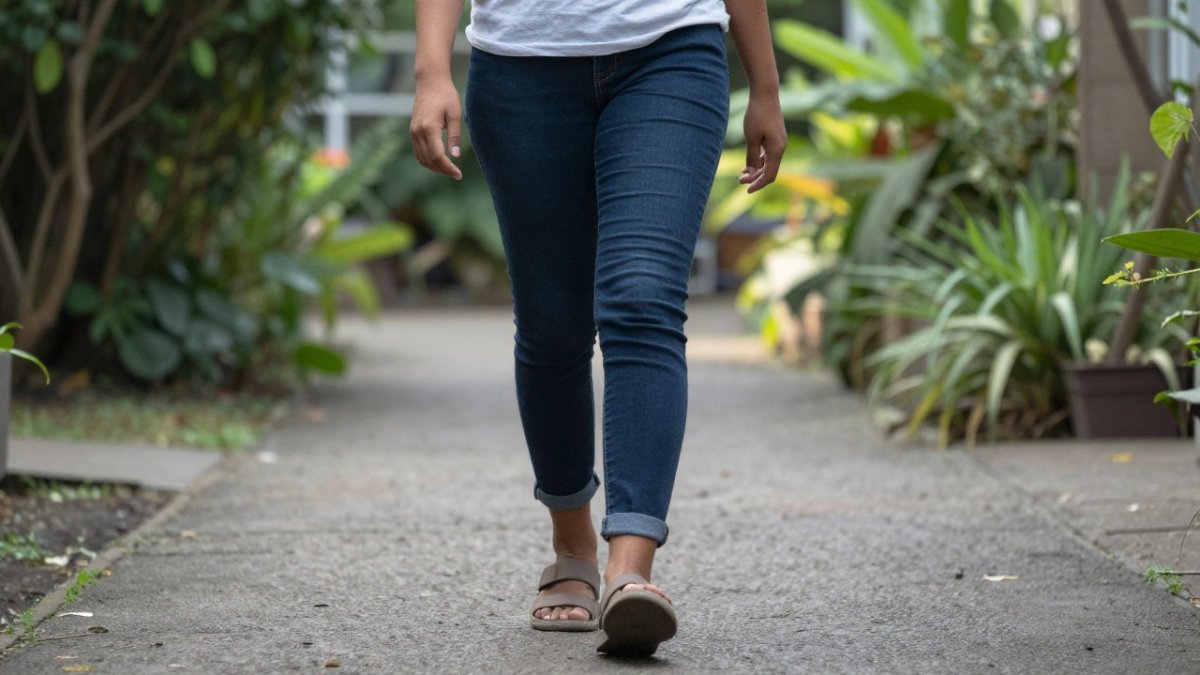
What You Need Before You Start
Nothing special. Gather these basics:
- A flat path about 10-30 feet long, indoors or outdoors
- Comfortable shoes or bare feet on a safe surface
- Loose clothing that does not restrict your stride
- A timer set to 10 minutes
- A quiet phone, or airplane mode
The 10-20 Step Back-and-Forth Method
This is the classic beginner format. Walk slowly from one end of your path to the other, taking roughly 10-20 steps. Stop. Feel your body. Turn around. Walk back.
- Stand still at one end. Feel your feet on the ground.
- Take one slow breath in and out.
- Begin walking at half your normal pace.
- Notice the lift, move, and place of each foot.
- At the end of the path, pause and stand for one breath.
- Turn slowly and walk back.
- Repeat until the timer ends.
Watch out: Most beginners walk too fast at first. Slow down until the pace feels almost comically gentle. That is the right speed.
If you want foundational guidance before your first session, our meditation for beginners resource walks through the basics of attention and posture.
Where to Focus: Feet, Breath, and the Sensations of Walking
The answer is simpler than most guides suggest: focus on the feet first. The feet give you the most reliable physical sensation, and physical sensation is easier to return to than a thought.
Here is the sequence we recommend:
- Feet and ground. Notice pressure, contact, and the moment of lift.
- Weight shift. Feel how the body moves over each leg.
- Breath. Let breathing find its own rhythm. Do not force it.
- Whole body. Widen attention to posture, balance, and movement.
Coordinating breathing with steps is optional. Some people link one breath to two or three steps. Others let breath move freely. Both are fine. Try each and keep what feels natural.
The point is not perfect concentration. The point is returning. Each return is the practice.
Your 10 Minute Walking Meditation Routine for Weekdays
A 10 minute walking meditation fits into a lunch break, a morning routine, or the gap between meetings. Consistency beats duration, especially in the first month.
Try this weekday structure:
| Time | What You Do | Why It Helps |
|---|---|---|
| Minute 1 | Stand still, feel the feet, take three slow breaths | Settles the body before movement |
| Minutes 2-4 | Walk slowly, attention on the feet | Builds sensory awareness |
| Minutes 5-7 | Walk at a natural pace, attention on breath and steps | Trains awareness in normal motion |
| Minutes 8-9 | Widen attention to sounds and surroundings | Opens sensory awareness |
| Minute 10 | Stop, stand, take one final breath | Closes the practice clearly |
A common mistake is skipping the standing bookends. Those quiet minutes at the start and end are what make the middle feel like practice rather than a stroll.
Meditation While Walking in Nature: Setting, Pace, and Safety
Walking meditation outdoors adds sensory richness, but it also adds variables. Choose your setting with the same care you would give any outdoor activity, and decide in advance how you will handle traffic, weather, and other people.
Good options include a park path, a quiet garden, a beach at low tide, or a tree-lined street. Our guide to being in nature explains why time among trees, plants, and open skies supports well-being.
Choosing a Path
Aim for a flat, even surface with good visibility and enough length to take 10-20 slow steps in one direction. A loop of roughly 30-50 feet works well because it lets you walk without constantly turning. Sidewalks are usable, but pick a block with light foot traffic and few driveways. Park paths and indoor hallways are often easier for a first session because there are fewer interruptions.
Watch out: Avoid uneven trails, gravel, roots, and curbs during your first few sessions. The slower pace of walking meditation makes it harder to catch a stumble, and most beginners find that a smooth surface frees up attention for the practice itself. On a smooth path, guided meditation for walking can help keep attention on each steady step rather than on the ground beneath it.
Pace and Awareness of Surroundings
Walk slower than usual, but keep your eyes open and partly raised. A soft, lowered gaze is fine on a private path; in public, keep your head up enough to see approaching people, cyclists, and vehicles. If you notice your attention sinking entirely into the feet, lift your gaze for a few steps and then return.
Watch out: Walking with your eyes fully closed outdoors is unsafe. Keep a soft, lowered gaze instead, and never use headphones at a volume that blocks traffic sounds.
Traffic, Weather, and Other People
- Cross streets only at marked crossings, and pause the practice while you cross.
- Walk facing traffic on roads without sidewalks, and stay well off the shoulder.
- Skip the practice in extreme heat, cold, ice, or poor air quality; indoor walking works just as well on those days.
- Tell someone where you are going if you walk alone, and carry a phone in a pocket rather than your hand.
- In busy parks, choose a quieter edge path or go earlier in the morning.
If you feel self-conscious walking slowly in public, a common pattern is to start indoors for the first week, then move to a quiet outdoor path once the sequence feels familiar. The setting is there to support attention, not to test your composure.
Using a Walking Meditation Script PDF to Keep Practice Consistent
A walking meditation script gives you a fixed sequence to follow, which can reduce decisions and make daily practice easier.
A useful script typically includes:
- A short settling instruction at the start
- Cues for feet, weight, breath, and surroundings
- Guidance for turning at the end of the path
- A closing instruction and a moment of reflection
You can also use a guided meditation recording on headphones for the first few sessions. Hearing another voice direct your attention is often easier than remembering instructions alone.
If you want to compare tools that support a steady practice, our article on types of meditation tools covers what to look for.
Troubleshooting Wandering Thoughts, Restlessness, and Accessibility Needs
Wandering thoughts are not a failure. They are the practice. The moment you notice the mind has drifted is the moment awareness has returned. Most beginner difficulties fall into a few predictable patterns, and each has a practical response.
Common Beginner Experiences
- Constant mental chatter. Label it softly as “thinking” and return to the feet. Expect this to happen dozens of times in ten minutes; that is normal, not a sign the practice is not working.
- Physical restlessness. Slow the pace further, or shorten the session to five minutes. Restlessness often settles once the body accepts that it is moving deliberately rather than rushing.
- Boredom. Widen attention to sounds, air on the skin, and the texture of the ground. Boredom is usually attention narrowing too tightly to one sensation.
- Sleepiness. Walk slightly faster, keep the eyes open and lifted, and practice earlier in the day rather than right after a heavy meal.
- Self-criticism. Treat the session as completed the moment you start it. Judging the quality of a session is itself a distraction from the practice.
Feeling Self-Conscious or Unsure You Are Doing It Correctly
Feeling awkward walking slowly in public is one of the most common beginner experiences, and it usually fades within a few sessions. If it does not, practice indoors or on a quiet path until the sequence feels familiar. There is no external standard to meet: if you are walking and returning attention to the body, you are doing it correctly. A useful check is to ask whether you noticed at least one physical sensation during the session; if so, the practice worked.
Building Consistency Without Turning It Into a Performance Metric
Consistency beats duration, especially in the first month. A simple progression is to start with five minutes, add one or two minutes each week, and cap the session at whatever length fits your schedule. A lightweight habit tracker, such as a mark on a calendar or a note in a phone app, is enough. Track only whether you practiced, not how calm or focused you felt, because judging the quality of each session tends to undermine the habit.
Accessibility and Adaptations
Walking meditation can often be adapted for people using a cane, walker, or wheelchair by focusing on arm movement, wheel contact, or body sensation. Seated versions of the same attention sequence work well, and a shorter path or a hallway is enough. If balance is a concern, practice near a wall or rail, or walk with a companion. These adaptations are practical adjustments, not medical advice; if you have a health condition that affects movement, check with a qualified professional about what is appropriate for you.
If low mood, anxiety, or sleep problems persist or worsen, speak with a qualified health professional. Meditation can support well-being, but it does not replace medical care. For anyone struggling with a restless mind, our article on when the mind finds stillness offers perspective on how calming effects tend to build over time.
Frequently Asked Questions
How long should a beginner practice walking meditation?
Start with 5 to 10 minutes and build from there. A short session you actually repeat beats a long one you avoid. Try the 10-20 step back-and-forth method for 10 minutes, then extend to 15 or 20 minutes once the rhythm feels natural. Many beginners find a 10 minute walking meditation fits easily into a lunch break or the walk to the station, which makes daily consistency more realistic than a longer formal sit.
What should I focus on during walking meditation?
Focus on the physical sensations of walking: the pressure of each foot on the ground, the lift and fall of your steps, and the movement of your breath. When your attention drifts to wandering thoughts, note it without judgement and return to the feet. Some people coordinate breathing with steps, such as inhaling for three steps and exhaling for three. The goal is not a blank mind but a gentle return of awareness to the present moment.
Can walking meditation help with anxiety and burnout?
Walking meditation is a supportive practice for calming the nervous system, not a treatment for anxiety or burnout. Some early research on outdoor mindful walking has reported improvements in mood and mindfulness, though the evidence is limited. If anxiety or burnout is affecting your daily life, speak with a qualified professional. LifePositive connects you with certified healers and therapists who can guide you alongside your own practice.
Do I need to walk slowly to meditate?
Slowness helps beginners notice physical sensations, but it is not a rule. A slower pace makes the pressure of the feet and the shift of balance easier to feel, which is why many guided scripts start with 10-20 deliberate steps. Once you are comfortable, you can practice at a normal walking pace outdoors, on a commute, or in daily life. The pace matters less than the quality of attention you bring to each step.


