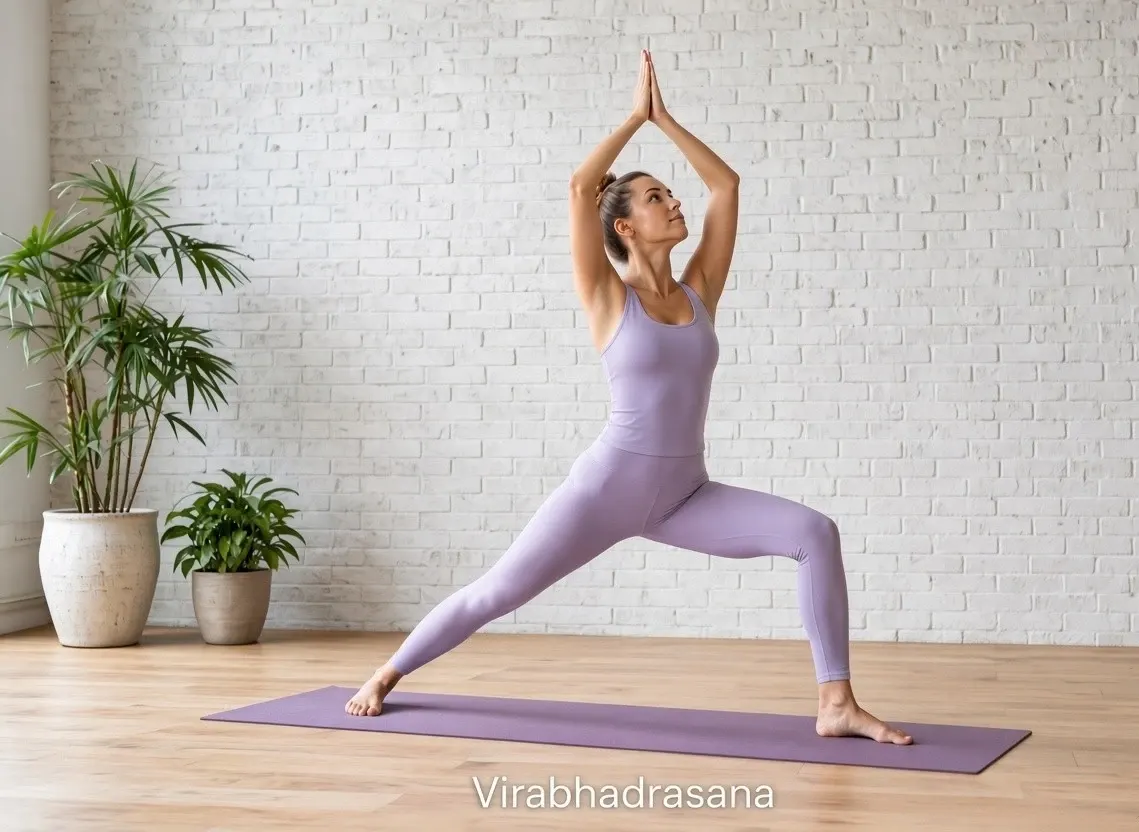
Virabhadrasana: Top Wellness Benefits
Virabhadrasana or the Warrior Pose, is a classic standing pose used in Hatha and Vinyasa Yoga practices that improves balance and stability, strengthens the lower body muscles and builds mental strength.
The name of this yoga pose is derived from its mythological character, Virabhadra, a warrior made by Lord Shiva, which requires balance both while grounding into the lower body and reaching up with the torso. Performing Virabhadrasana daily helps strengthen the legs, open the chest, and improve overall body stability.
Key Takeaways
- Structural Integration: Simultaneously builds isometric quadriceps strength while lengthening tight hip flexors and stabilizing the ankle complex.
- Postural Realignment: Counteracts chronic sitting by strengthening the posterior chain, activating deep core muscles, and expanding thoracic capacity.
- Neuromuscular Balance: Enhances proprioception and focal concentration, helping regulate stress responses through steady, controlled diaphragmatic breathing.
Mastering Virabhadrasana: Alignment & Biomechanics
Virabhadrasana acts as an essential pillar in postural alignment. Executing the pose correctly ensures maximum engagement of stabilizing muscle groups while mitigating unnecessary stress on weight-bearing joints.
Variations of Virabhadrasana (Warrior Pose)
Some of the common variations of the asana Virabhadrasana are as follows:
|
|
|
|
|
|
|
|
|
|
|
|
|
|
|
|
|
|
|
|
How to Perform Virabhadrasana (Warrior Pose)
Follow these steps to practice Virabhadrasana:
- Set Up the Foundation: Start by standing tall in Tadasana position and moving the legs wide apart (about 3.5-4 feet).
- Position the Feet: Position your right foot at a right angle and your left foot in an angle between 15 to 45 degrees.
- Position the Pelvis: Shift your pelvis towards the front or side of your mat depending on the particular variation of Warrior pose that you are doing.
- Bend the Lead Leg: As you exhale, bend the knee of your front leg until it is parallel to the floor such that your knee is aligned directly above your ankle.
- Position the Hands: Extend the hands parallel to the floor or overhead in Warrior I while reaching with fingers stretched in opposite directions and with shoulders relaxed.
- Position the Head: Rotate your head over the front hand while holding your body in position and breathing steadily.
Health Conditions Managed by Performing Virabhadrasana
Regular practice of Virabhadrasana has therapeutic effects on your health.
- Chronic Pelvic and Lower Back Pain: Eases lower back pain and helps loosen the hip flexors.
- Posture Problems and Stiffness in the Upper Back: Helps open up the chest cavity, lunges and rib cage to correct slumped posture.
- Lack of Physical Endurance: Strengthens the lower body, abdominal muscles, and back muscles.
- Anxiety, Stress, and Mental Fatigue: Promotes emotional balance, increases concentration and helps reduce stress from the shoulders and hips.
Key Precautions
Follow these measures while performing Virabhadrasana (Warrior Pose):
- Protect the Knee Joint: Make sure that the front knee does not go past the ankle joint or collapse inwards to protect the patella and ligaments from any strain.
- Prevent Lumbar Hyperextension: Maintain engagement of the core muscles and slight elongation of the tailbone to prevent hyperextension of the lower back.
- Address Hypertension: Refrain from keeping arms overhead if you suffer from high blood pressure; keep hands on the hip bones instead.
- Take Care of Cervical Spine Sensitivities: Maintain eye level looking straight ahead rather than tilting the neck up or stretching towards the front hand.
Final Thoughts
Virabhadrasana bridges the gap between muscular strength and mindful awareness. By integrating the Warrior pose into a regular practice with attention to knee-over-ankle tracking and active core engagement, practitioners cultivate physical stability, improved posture, and grounded focus on and off the mat.
Frequently Asked Questions
1. Which is the mother of all yoga?
Sarvangasana (Shoulder Stand) is widely known as the basic root or "mother" of all physical types of yoga. It is beneficial for the whole body.
2. Is Virabhadrasana beneficial for treating back pain?
Yes, Virabhadrasana makes the glutes, hamstrings, and core muscles strong while making the tight hip flexors elongate. It decreases the pressure on the spine and improves poor posture.
3. Which is the most powerful asana?
Although it can be said to be subjective, some asanas such as Siddhasana and Virabhadrasana are regarded as extremely powerful poses because they involve physical stamina along with mental focus.
4. What are the advantages of Virabhadrasana?
Virabhadrasana increases leg and arm strength and stretches the hips and chest. It also helps in improving balance and stamina.
Disclaimer: The content on LifePositive.com, including articles/blogs on yoga, acupuncture, naturopathy, and other alternative healing modalities for holistic wellness, is for informational and educational purposes only. It is not a substitute for professional medical advice, diagnosis, or treatment. Always consult a qualified healthcare provider before starting any new health protocol or making changes to an existing treatment plan.
Also Read: Is Ayurveda Naturopathy?
By Umesh Kumar Khiri


Discussion (0)
No comments yet. Be the first to comment!
Leave a Comment
You need to login to post a comment.