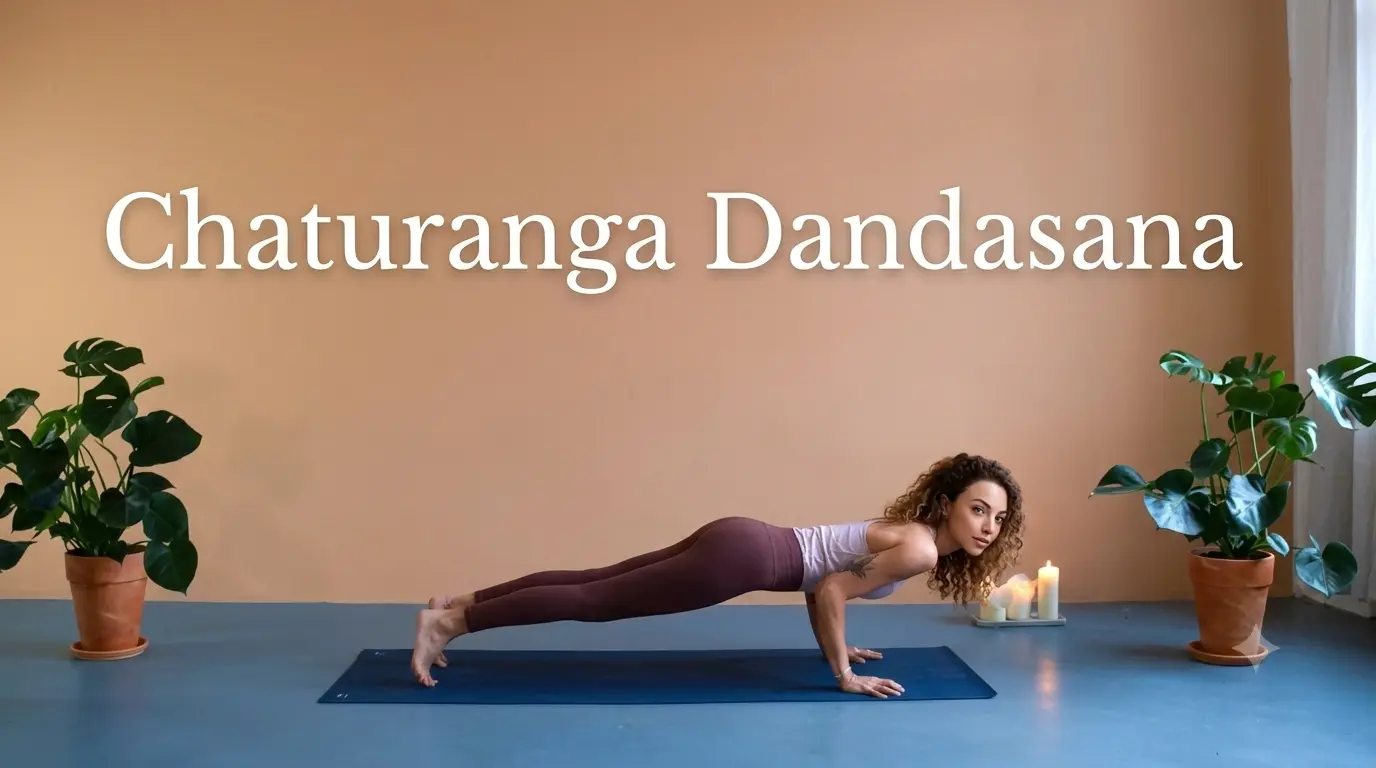
Chaturanga Dandasana: Four-Limbed Staff Pose
Chaturanga Dandasana, which is often referred to as Four-Limbed Staff Pose, is one of the fundamental movements used in linking dynamic exercises with isometric stabilization. Functional strength cannot be attained through muscular strength alone; rather, it requires body balance, body stability, and body integration. Though this movement can easily be confused with the common low push-up exercise, it depends on coordination between your shoulders, arms, core, and legs. Proper execution of the movement will help develop body awareness and joint stability. Repeatedly performing this movement incorrectly can put pressure on your wrist and shoulders.
Key Takeaways
- Builds upper-body strength: Fortifies arms, shoulders, chest, and core.
- Improves joint stability: Connects shoulders, core, and legs as one solid unit.
- Powers flow transitions: Serves as a vital foundation for vinyasa sequences.
What Is Chaturanga Dandasana (Four-Limbed Staff Pose)?
The Sanskrit name of Chaturanga Dandasana is translated into English as the Four-Limbed Staff Pose. Chatur in Sanskrit means four, Anga means limbs or parts of the body, Danda means staff or stick, while Asana means pose.
This pose looks like a straight stick that is parallel to the floor, with the body held up by hands and toes, where the elbows are bent close to the sides as the body moves down into an alignment from head to heels.
The Four Limbed Staff Pose is often practiced in Sun Salutation and vinyasa practices. Since it requires support on the body from the hands and toes, building enough strength and control becomes essential.
How to Perform Chaturanga Dandasana (Four-Limbed Staff Pose)
Observe the exercise at a slow pace and try to ensure that you maintain body stability throughout the process.
- Commence the exercise in a high plank position, where your palms are placed either directly under your shoulders or slightly ahead of your shoulders.
- Press the palms of your hands firmly into the floor, using your fingers spread.
- Straighten out your legs at the back of your body.
- Tighten the thigh muscles.
- Also activate your core muscles for torso stabilization.
- Slightly move your shoulders forward in preparation for the lowering action.
- As you begin the lowering action, bend your elbows while keeping them close to the sides of your ribcage.
- Make sure that your body lowers as one piece of machinery, and avoid letting your hips and chest drop separately.
- Try to achieve an arm placement parallel to the floor but only if this feels comfortable and you are stable.
- Avoid letting your shoulders collapse toward the ground.
- Keep your eyes fixed forward or on the ground.
- Breathe in your normal rhythm.
Benefits of Chaturanga Dandasana
Some of the benefits of performing the Four-Limbed Staff Pose regularly are:
|
|
|
|
|
|
|
|
|
|
|
|
|
|
|
|
|
|
|
|
|
Prepare Before Chaturanga Dandasana
Preparation is especially significant when you are in the process of building up upper body strength.
Some effective exercises and postures to follow are:
- High Plank
- Knee-Bent Plank
- Incline Push-ups
- Chaturanga Variation
- Strengthening the shoulders
- Core exercises
- Wrist mobility exercises
- Slow transition from planks to lower positions
Begin with short holding times and stabilize your core first. Performing multiple controlled reps may prove more beneficial than doing several reps poorly.
Precautions
- Properly align yourself: Bad alignment may create excessive pressure on the wrists, elbows, and shoulders.
- Take care of your injuries: Those practitioners who have been injured in the wrist, shoulders, elbows, and back should consult an expert before performing the pose.
- Do not rush yourself: Lower yourself just up to the point where you still can control yourself.
- Stop if you feel anything wrong: Pain, numbness, and joint problems must be avoided, so you need to stop if you feel any of them.
- Pain is not good: Pain should not be considered a sign that the posture works well.
- Develop your strength: Let your body become stronger step by step through constant practice.
- Perform modifications: You can perform knee-supported or any other modification until you get used to the full pose.
Summing Up
Chaturanga Dandasana is a powerful strength-building posture that teaches practitioners how to combine stability, alignment, and controlled movement. While it may look straightforward, maintaining the body as one stable unit requires coordinated engagement throughout the arms, shoulders, core, and legs. Practising a modified version is often the best starting point for those still developing the required strength. Rather than focusing on how low you can go, concentrate on maintaining steady breathing, controlled movement, and sound alignment. With consistent practice, Chaturanga Dandasana can become a strong foundation for a balanced and mindful yoga practice.
FAQs
1. Why is Chaturanga Dandasana challenging?
Several muscle groups need to engage simultaneously and coordinate their actions while the body is in a stable position. All these factors make the pose challenging.
2. How long should I hold Chaturanga Dandasana?
It is not necessary to hold the pose for a long time; only a brief and controlled hold is needed while mastering the pose. You should concentrate more on breathing.
3. Is it possible to practise Chaturanga without performing a push-up?
Yes, it is possible to perform partial range poses, a knee-supported pose, or an incline variation of the pose.
4. What should be my priority during the pose?
You should focus your attention on the stability of body alignment, activation of core and legs, elbow control, shoulder activation, and breathing.
Disclaimer: The content on LifePositive.com, including articles/blogs on yoga, acupuncture, naturopathy, and other alternative healing modalities for holistic wellness, is for informational and educational purposes only. It is not a substitute for professional medical advice, diagnosis, or treatment. Always consult a qualified healthcare provider before starting any new health protocol or making changes to an existing treatment plan.
Also Read: Hanumanasana
By Umesh Kumar Khiri



Discussion (0)
No comments yet. Be the first to comment!
Leave a Comment
You need to login to post a comment.