Downward Dog Yoga: Powerful Benefits and Safe Technique
Walk into almost any studio and you will meet downward dog yoga within the first ten minutes. It appears in warm-ups, flows, and cool-downs, yet plenty of practitioners hold it in ways that quietly load the wrists or round the lower back.
Done well, the pose stretches the whole back of the body, builds shoulder strength, and gives your breathing a steady place to land. This guide walks through the technique, the benefits that research actually supports, common mistakes, and who should adjust the shape.
Key Takeaways
- Downward dog yoga (adho mukha svanasana) stretches the hamstrings and calves while asking the arms, shoulders, and core to share the work.
- A long, comfortable spine matters more than straight legs, so bend your knees whenever you need to.
- One electromyography study found that the pose engages the external obliques, while claims about mood and brain blood flow rest more on tradition than on pose-specific trials.
- Head-down poses raise eye pressure within about a minute, so anyone with glaucoma should check with an eye doctor first.
- Wrist pain, high blood pressure, and pregnancy are all good reasons to modify the shape.
- Blocks, a chair, or a wall make the pose workable for many different bodies.
What Is Downward Dog Yoga?
The Sanskrit name, adho mukha svanasana, combines four words: adho means down, mukha means face, svana means dog, and asana means pose. The shape borrows from the way dogs stretch after a nap, with the chest melting toward the thighs and the hips lifting high.
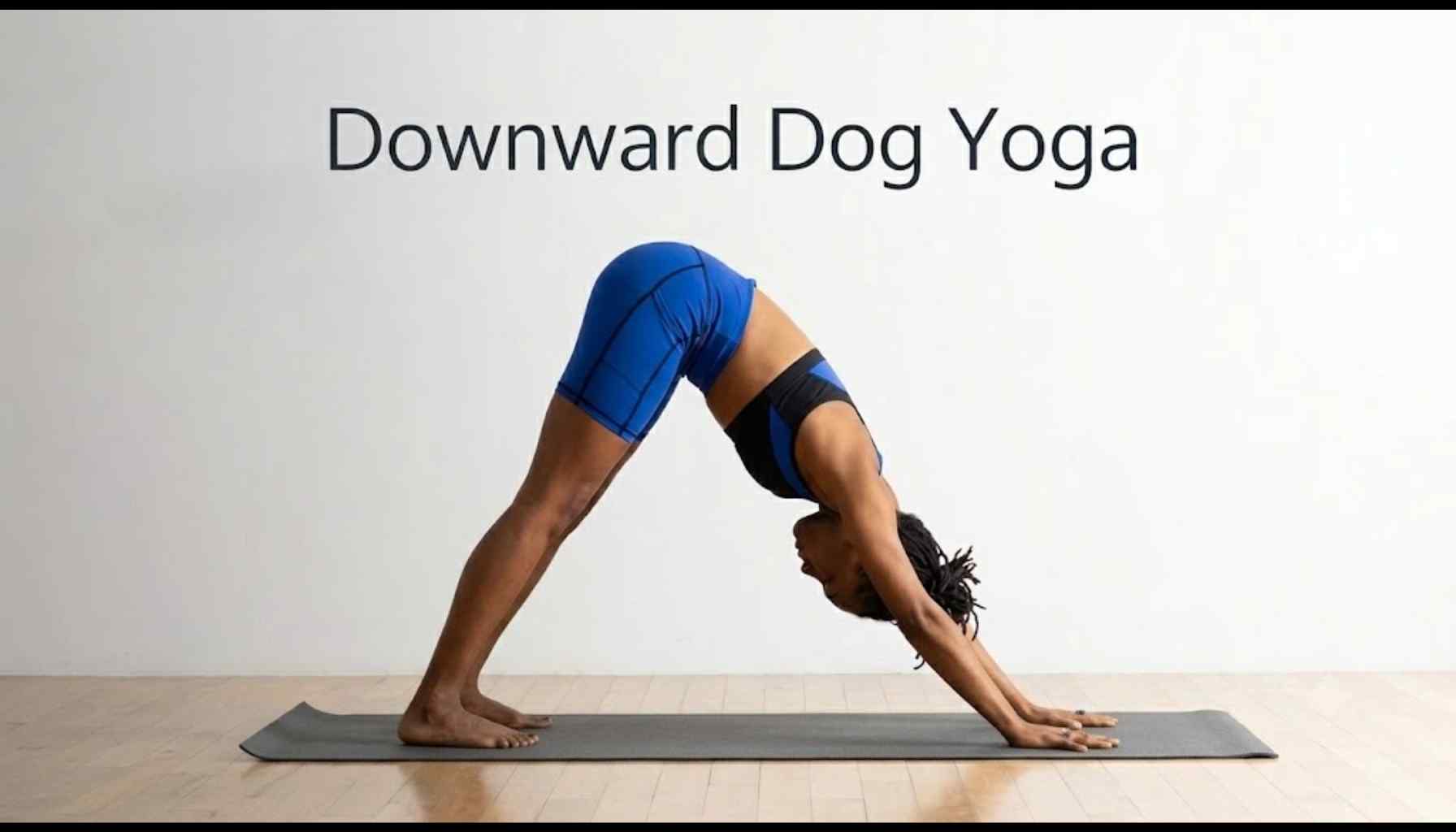
Your hands and feet stay grounded while the hips rise toward the ceiling, forming an upside-down V. Because it sits inside Sun Salutations, the downward-facing dog works both as a transition between poses and as a short rest. Many vinyasa teachers return to it again and again, and you will meet it in hatha and Ashtanga classes too.
Is it an inversion? Yes, a mild one, because your head sits below your heart. That detail explains the eye and blood pressure cautions covered later in this guide.
Where Does Downward Dog Come From?
Downward dog is a younger pose than many people assume. Yoga historians trace it to two sources: Indian physical-culture exercises that included a posture close to the shape we know today, and the Sun Salutation, where it appears twice in the classic 12-posture sequence. Neither was considered yoga in the 1930s.
That changed when Swami Kuvalayananda worked the pose into his exercise system in the early 1930s. His pupil Tirumalai Krishnamacharya, one of the most influential yoga teachers of the twentieth century, then carried it into his own teaching. From there it spread into Ashtanga, vinyasa, hatha, and Iyengar classes, which is why downward-facing dog now feels like the face of modern yoga.
How to Do Downward Dog Yoga Step by Step
Take your time getting in. A few slow rounds of cat-cow beforehand warm up the spine and shoulders, which makes the shape feel friendlier.
- Begin on hands and knees. Stack your wrists under your shoulders and your knees under your hips. Spread your fingers wide and press evenly through each palm, especially the base of the thumb and index finger.
- Set your stance. Hands sit about shoulder-width apart and feet about hip-width apart. Rotate your upper arms slightly outward so your shoulder blades glide away from your ears.
- Tuck your toes under. As you exhale, lift your knees and send your hips up and back.
- Keep a generous bend in your knees at first. Lengthen the spine before you think about straightening the legs.
- Let your head hang freely between your arms. Your ears should line up with your upper arms, and your gaze can drift toward your navel or feet.
- Breathe slowly for five to ten breaths, then lower your knees to rest.
You can enter from tabletop, from child's pose, or by stepping back from a standing forward fold. To leave, lower your knees into child's pose or walk your feet forward between your hands.
Think of the downward dog pose as pushing the floor away rather than sinking into your shoulders. That one cue changes how the whole shape feels.
Benefits of Downward Dog Yoga Backed by Research
Strength in the arms, shoulders, and core
Because your hands carry weight, the pose strengthens the hands, wrists, forearms, shoulders, and upper back. The core joins in too. A 2014 study in Complementary Therapies in Medicine tracked muscle activity in 30 healthy yoga practitioners across 11 poses and reported that the downward-facing dog, along with the high and low plank, is effective for working the external obliques, the muscles along the sides of your waist.
A stretch for the back of your body
The pose lengthens the hamstrings, calves, Achilles tendons, and the arches of the feet. It also reverses the usual direction of load on the spine, which many people find relieving after long hours at a desk.
Calm, focus, and what the evidence does not show
Slow breathing inside the shape can settle a busy mind. Research on yoga overall is encouraging here. The National Center for Complementary and Integrative Health notes that a 2020 review of 12 studies with 672 healthy adults found lower perceived stress in every one. Still, no trial isolates this single pose, so treat the calming effect as part of a wider practice.
You will also hear that the position boosts circulation to the brain because the head sits below the heart. The idea is popular among teachers, but pose-specific evidence is thin, so it is best read as tradition rather than proof.
Is Downward Dog a Resting Pose?
Teachers often cue it that way. In vinyasa classes you return to downward dog again and again, and it works as a place to reset the breath between more demanding shapes. Experienced practitioners may find it genuinely restful.
For many beginners, though, it is real work. The hands, wrists, and shoulders carry your weight, and tight hamstrings can pull the spine out of shape. Whether it feels like a rest depends on your strength, flexibility, and how much you modify it.
The idea of down dog as a cure for tiredness is also old. B.K.S. Iyengar, the founder of Iyengar yoga, taught that it relieves fatigue, especially for runners. Like many twentieth-century teaching claims, it came without research behind it, so treat it as experience rather than evidence. If the pose does not feel restful today, drop to child's pose and return when you are ready.
How Downward Dog Differs Across Yoga Styles
The shape is the same, but the emphasis changes from class to class.
- Vinyasa and Ashtanga: the pose usually appears as a brisk transition inside Sun Salutations, often with a cue to press the heels toward the floor.
- Iyengar: classes tend to spend longer in the pose and use props such as blocks, a wall, or a bolster to refine alignment.
- Arm cues: some teachers turn the upper arms outward, while others turn them inward. Try both and keep the one that gives your neck the most room. The steps above use the outward rotation.
Poses to Prepare for and Follow Downward Dog
A short warm-up makes the shape feel steadier, and a gentle follow-up eases the wrists and hamstrings.
- Cat-cow: warms up the spine and shoulders before you lift the hips.
- Bear crawl or hovering knees: builds the arm and shoulder strength the pose asks for.
- Plank: teaches the same pressing-away action with the hips lower.
- Child's pose: a calm place to rest after the pose and reset your breath.
- Standing forward fold: continues the hamstring and calf stretch with the weight off your hands.
- Wrist circles and gentle palm stretches: ease the hands and forearms after bearing weight.
A Two-Minute Downward Dog Sequence
This short flow takes about two minutes and uses only poses already covered in this guide. Move slowly and keep your knees bent in down dog if your hamstrings or wrists need it.
- Cat-cow, 6 slow rounds. Warm up the spine and shoulders on hands and knees.
- Downward dog, 5 breaths. Press the floor away and keep a soft bend in the knees.
- Plank or hovering knees, 3 breaths. Keep the same pressing-away action with the hips lower.
- Downward dog again, 5 breaths. Try a little more length in the spine this time.
- Child’s pose, 5 breaths. Let the wrists, shoulders and hamstrings settle.
Skip or modify this sequence if any of the cautions in the “Who Should Be Careful” section apply to you. Wrist or shoulder problems call for the forearm version, and glaucoma or high blood pressure call for medical advice first.
Is Your Downward Dog Working? A Quick Checklist
Check yourself against these signs the next time you hold the pose:
- Your spine feels long, not rounded. If it rounds, bend your knees more.
- Your weight is spread across the whole palm, not collapsed into the heels of your hands.
- Your shoulders are away from your ears, with your upper arms rotating slightly outward.
- Your head hangs freely between your arms, in line with your ears and upper arms.
- Your heels can hover. Touching the floor is not the goal.
- Your breath stays slow and smooth. If you are holding your breath, ease off.
- You feel no sharp pain, numbness, tingling, dizziness, or pressure in your eyes or head. Any of these means come out of the pose.
Common Mistakes in Downward Dog Yoga and How to Fix Them
- Rounded back: bend your knees deeply and tilt your tailbone toward the ceiling until the spine lengthens.
- Hunched shoulders: press the floor away and rotate your upper arms outward to make room around the neck.
- Collapsing hands: spread your fingers and share the weight across the whole palm, not only the heel of the hand.
- A stance that is too short or too long: a good guide is roughly the distance you would use in a high plank.
- Forcing the heels down: they do not need to touch the floor, and tight calves are completely normal in down dog.
- A dangling or craning neck: keep the head relaxed and in line with your arms.
Downward Dog Pose Variations and Modifications
One pose, many versions. Adjusting the shape often matters more than perfecting it.
- Bent knees or pedaling feet: eases tight hamstrings and invites the spine to lengthen.
- Hands on blocks or a rolled towel: reduces wrist load by shifting weight toward the legs.
- Wall or chair version: place your hands on a wall, or on the seat of a sturdy chair set against a wall, and walk your feet back until your body forms an L. The higher surface keeps the stretch with less strain on the joints, which suits anyone who finds the floor version hard to reach. Older adults are generally advised to start with gentle or chair-based classes and to check in with a healthcare provider first.
- Dolphin pose: rests the forearms on the floor so the wrists stay out of the equation.
- Tight hamstrings or hips: keep a generous knee bend, lift the heels if you like, and step the feet a little wider than hip-width so the spine can stay long.
- Weak shoulders: use the wall version or dolphin pose, and keep holds short so the shoulders build strength gradually.
- Sensitive knees or lower back: avoid locking the knees, keep a soft bend, and reach the tailbone up and back rather than pushing the chest toward the thighs.
- Pregnancy: widen the stance, raise the hands on blocks, and ask a healthcare provider or prenatal instructor what suits your stage.
- Three-legged version: once the basic shape feels steady, lift one leg for an extra challenge.
Who Should Be Careful with Downward Dog Yoga?
A pose that suits most people can still be a poor fit for some. Speak with a healthcare provider if any of the following applies to you.
Eye pressure is the best-studied concern. A 2015 PLOS ONE study followed 10 people with glaucoma and 10 without while they held four head-down poses for two minutes each. Eye pressure rose significantly within a minute in every pose, and the downward-facing dog produced the largest jump. The researchers could not say whether such short spikes affect glaucoma progression over time and called for more studies. Until then, anyone with glaucoma should ask their eye doctor and tell their yoga teacher.
- High blood pressure or frequent headaches: some teachers suggest resting the head on a bolster, but ask your clinician first.
- Heart conditions, dizziness, or fainting spells: the head-down position can feel unsteady, so get medical advice before trying it.
- Wrist or shoulder injury, including carpal tunnel symptoms: choose the forearm version or skip the pose for now.
Come out of the shape if you feel sharp pain, numbness, tingling, dizziness, or pressure in your eyes or head.
How Long Should You Hold the Pose?
No research sets an ideal hold time for this pose, so let comfort guide you. A common approach is to start with a few breaths and build gradually up to five to ten slow breaths as the shoulders and wrists adapt. Inside a flow, a few breaths at a time is plenty. Short, regular practice usually helps more than one long, strained hold, and down dog is meant to feel steady rather than heroic.
Frequently Asked Questions
Is downward dog yoga good for beginners?
Yes, with sensible adjustments. Keep your knees bent, your stance modest, and use blocks if your wrists complain. A teacher can also check your alignment in person, which speeds up progress in down dog.
What muscles does downward dog yoga work?
It works the shoulders, upper back, arms, hands, and core, including the external obliques. It also stretches the hamstrings, calves, and the soles of the feet.
Is downward dog yoga an inversion?
Yes, a gentle one. Your head sits below your heart, but your weight stays on your hands and feet, so it is far milder than a headstand. The same head-down position is why people with glaucoma or high blood pressure should check with a clinician first.
Why does downward dog hurt my wrists?
Usually too much weight is sitting in the heels of the hands. Spread your fingers, press through the whole palm, bend your knees, or try blocks or dolphin pose. Pain that lingers deserves a check with a clinician.
Should my heels touch the floor in downward dog?
No. Many teachers cue the heels toward the floor, but how close they get depends mostly on your calves, hamstrings, and ankles. Reaching for the floor at the cost of a rounded back is a poor trade. Keep the knees bent, lengthen the spine, and let the heels hover or lower as far as is comfortable.
What is the difference between downward dog and upward dog?
They are opposite shapes. Downward-facing dog lifts the hips high and stretches the back of the body, while upward-facing dog is a gentle backbend that opens the chest and the front of the body. In a vinyasa flow they often appear back to back, which is why people mix them up.
Can downward dog help with back pain?
Some people find the lengthening feels good, but studies look at yoga as a whole rather than this pose alone. NCCIH says yoga may offer a small benefit for low-back pain. If pain is ongoing, get medical advice before adding the downward dog pose to your routine.
Bottom Line
Downward dog yoga earns its place in so many classes because it combines strength, stretch, and steady breathing in a single shape. Focus on a long spine, soft knees, and active hands rather than chasing straight legs.
Use props when you need them, respect eye, wrist, and blood pressure concerns, and let comfort decide how long you stay. Practiced patiently, adho mukha svanasana can become a dependable reset for body and mind.


Discussion (0)
No comments yet. Be the first to comment!
Leave a Comment
You need to login to post a comment.